Rather fill it in on screen? The fire drill timer times the drill on your phone, or takes the details afterwards, and prints the same record.
Or keep it on your phone instead
Record each drill from a phone, with who took part and what went wrong, and a second person signs it off on theirs.
Remind me when the next drill is due
Starts a 14-day trial, no card needed. Then from £19 a month per building. How the reminders work.
What it records
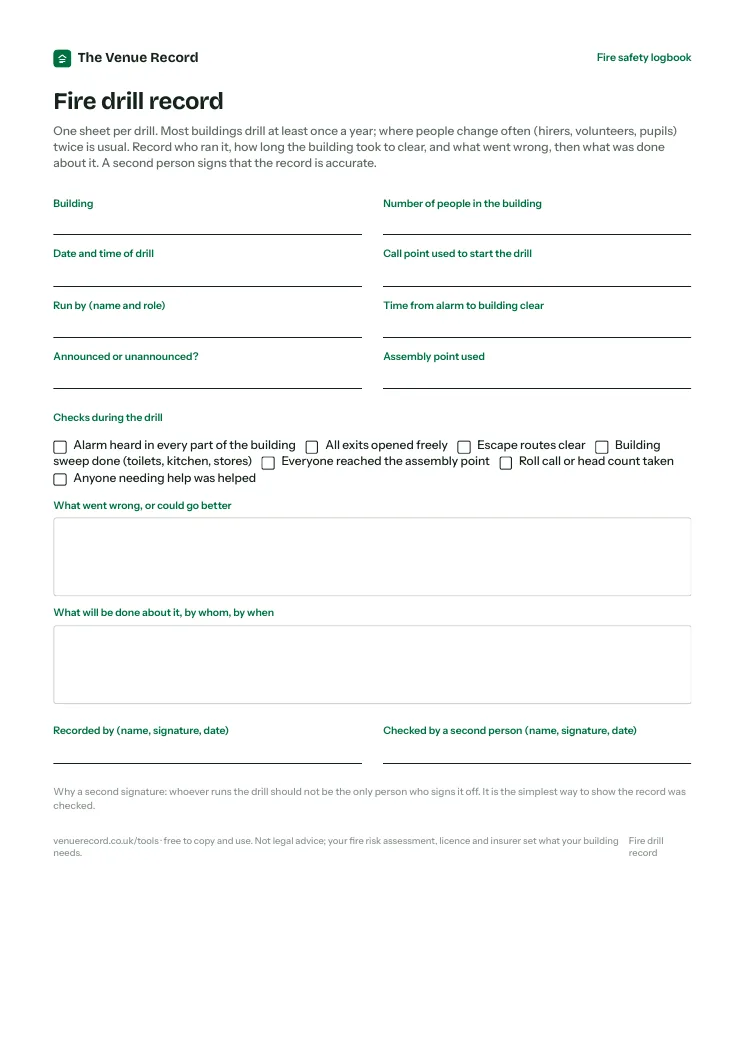
- The date and time, who ran it, and whether it was announced
- How many people were in the building, the call point used, how long it took to clear, and the assembly point
- Seven checks, from the alarm being heard everywhere to the head count
- What went wrong, and what will be done about it, by whom, by when
- Two signatures: the person recording it and a second person checking it
Using it
Fill it in straight after the drill, while people remember. The most useful line is “what went wrong”: a blocked exit, a gate nobody has the key to, the toilets nobody swept. A drill that found nothing usually wasn’t looked at closely.
Most buildings drill at least once a year, and twice where people change often. More on what to record, and why, in the fire drill records guide.
Questions
What should a fire drill record include?
The date and time, who ran it, how many people took part, how long the building took to clear, whether everyone reached the assembly point, what went wrong and what will be done about it.
How often should you have a fire drill?
Common practice is at least once a year, and more often where staff, volunteers or users change frequently. Your fire risk assessment sets what your building needs.
Not legal advice. Your fire risk assessment, your licence and your insurer set what your building needs.
Rather not keep it on paper?
The Venue Record sends each check to whoever does it, by email, and they record it from their phone with no account. A second person can approve it, and the whole record is there to hand over when someone asks. How the reminders work.